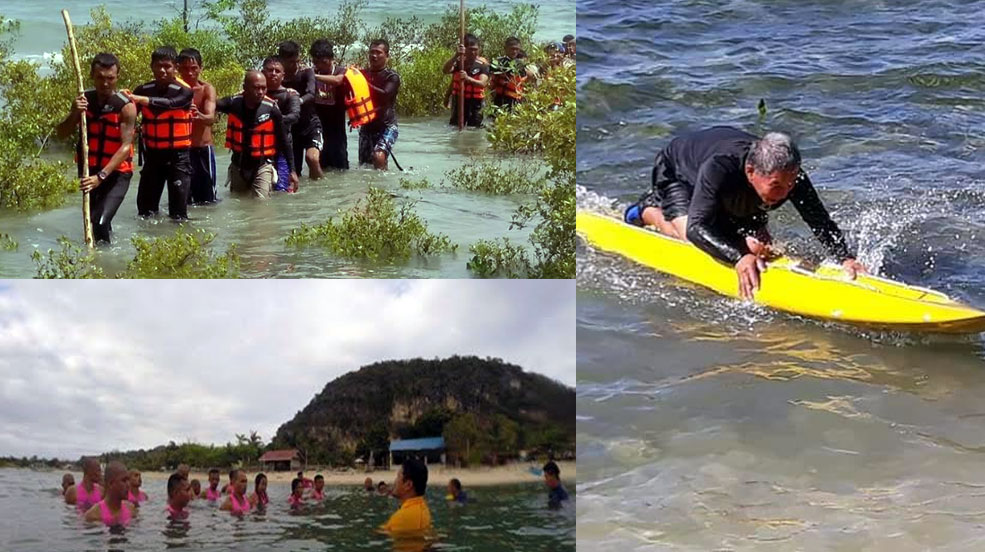
-
I. Review of the different open water environments, including its potential dangers that one should know in the area:
- Beach and surf can be dangerous because of plunging, spilling, surging waves and tidal, runback and rip currents.
- River, creeks and waterholes can be dangerous because of current, crumbling banks, uneven and unsafe river beds and submerged obstacles.
- Lake and dams could be dangerous because of river entry points, cold water, waves
- Leisure pools at water parks could be dangerous because of large crowds (Young children, elderly and non-swimmers) exposure to man-made swift waters similar to rivers and even floods which are having varied depths and slippery surfaces on edges.
-
II. Review the elements of stroke, proper warm-up and cooling down procedures and their usefulness to open water rescue
-
III. Evolution on fitness level for open water environment
- Practice swimming using prescribed strokes at current best time and gradually achieving time of 20 minutes for an 800 meters swim at open water.
- Demonstrate 200-meter run; 200-meter swim; and 200-meter run in an open water environment using freestyle and breaststroke with the goal of achieving run-swim-run total time of 6 minutes.
- Perform surface dive and underwater swim at a distance of 25 meters.
- Practice recovering objects placed underwater simulating an underwater rescue assistance.
-
IV. Study swift water and flooding hydrology
-
V. Plan out crossing rivers or floods
- Locate Hazards at Swift Water
- Timing and preparing to cross
- Crossing solo techniques (Body position, side shuffle, tripod method)
- Crossing with a group
- Correcting from a fall
- Avoid swimming against current until close enough to the bank for safety exit
- Share your float plan: where you are going, the detailed route, your plan departure, and expected return time.
-
VI. Gear recommendations